TEIDe Consortium

Bridging scientific research and primary care to support personalized, scalable prevention strategies based on physical exercise.

Early prevention

Personalization

Real-world application

Patient and Public Involvement

What is TEIDe

A European project for

dementia prevention

TEIDe – Tailored Exercise Interventions for Dementia prEvention – was created to bridge the gap between robust research evidence on the role of exercise in cognitive health and its practical use in primary healthcare.

The project brings together predictive medicine, precision exercise, mechanistic research and clinical application to develop prevention strategies that can identify risk earlier, tailor exercise to individual characteristics, understand why exercise may protect cognitive health, and test whether these approaches can work in real-world primary care.

Adults high-fiving during an outdoor exercise

The challenge

Turning evidence into

effective prevention

Dementia is a major cause of disability in later life, yet prevention strategies are still difficult to translate into routine care. TEIDe addresses a clear opportunity: use existing large-scale data and exercise trials to identify who may be at risk, determine what type and dose of exercise may work best for different people, and turn this evidence into practical pathways for primary healthcare.

Our vision

TEIDe aims to make dementia prevention earlier, more personalized and more implementable by connecting scientific evidence on exercise and cognitive ageing with tools and workflows designed for primary care.

The approach

The four pillars

of TEIDe

The project is built around four integrated scientific pillars, designed to move from prediction to personalization, understanding and real-world implementation.

Predictive medicine

Develop and validate risk scores for all-cause and cause-specific dementia that can support earlier identification of people at risk in primary healthcare.

01.

Precision medicine

Identify the types and doses of exercise most likely to support cognitive health according to individual characteristics such as sex/gender, age, education and cognitive or functional status.

02.

Mechanistic approach

Investigate how different forms of exercise may influence cognition through cellular and molecular pathways, brain structure and function, and behavioural mechanisms.

03.

Clinical application

Test whether a holistic prevention pathway – risk screening, tailored exercise prescription and in-person exercise intervention – is feasible within primary healthcare.

04.

An integrated pathway linking scientific research and clinical practice.

TEIDe CONSORTIUM

The Consortium

An international

collaboration

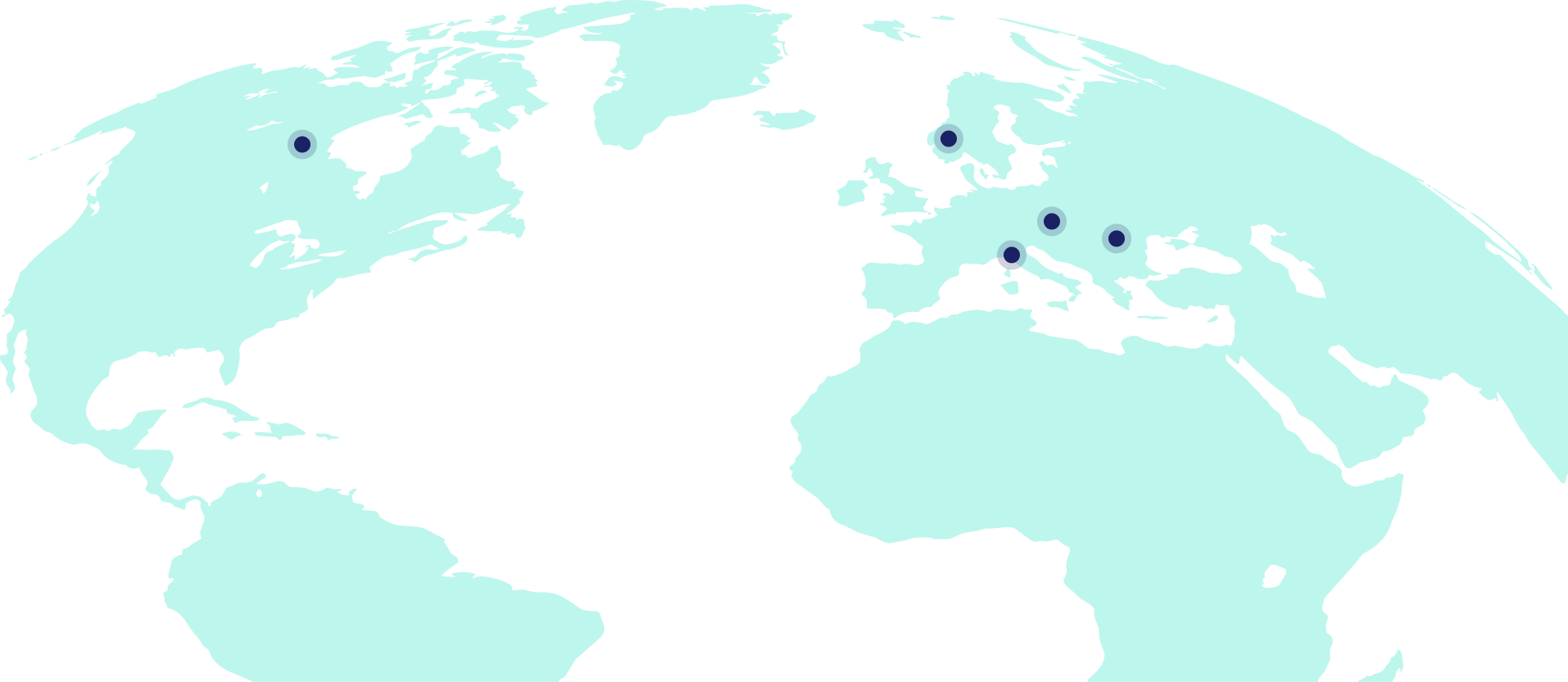
TEIDe brings together nine partners across Europe and North America, with institutions from Spain, Norway, Germany, Italy, Slovakia, Romania, the United States and Canada. Together, the network connects academia, primary healthcare, technology, patient advocacy and stakeholder engagement across eight countries.


International collaborations: Canada and the United States

Scientific coordination of the project: Spain

Partner countries: Germany, Italy, Norway, Romania, Slovakia

09

Consortium partners

08

Countries involved

08

Work Packages across the project

The partners

A network of

complementary expertise

Each TEIDe partner contributes a distinct capability: scientific coordination and exercise neuroscience; epidemiology and risk prediction; precision exercise; mechanistic and biomarker research; primary healthcare implementation; data science and artificial intelligence; and patient and public involvement, communication and dissemination. The two North American collaborators add expertise in exercise trials, neuroimaging, cognitive ageing, data analysis and knowledge translation.

TEIDe For…

Reaching

beyond Research

TEIDe is designed for people at risk of cognitive decline, families and caregivers, patient associations, healthcare professionals and systems, exercise professionals, researchers and policymakers. Their perspectives help ensure that the project’s outputs are scientifically sound, practically relevant and socially meaningful.

For People at Risk

For Caregivers

For Patient Associations

For Healthcare Professionals

For Healthcare Systems

For Researchers

Latest updates

News

Research & Innovation

Innovation & evidence

for prevention

TEIDe draws on data, clinical studies, and scientific evidence to support exercise-based approaches to preventing cognitive decline.

Discover Research & Innovation

Research & Innovation

Innovation & evidence

for prevention

Lorem ipsum dolor sit amet, consectetur adipiscing elit, sed do eiusmod tempor incididunt ut labore et dolore magna aliqua.

Lorem ipsum

TEIDe draws on data, clinical studies, and scientific evidence to support exercise-based approaches to preventing cognitive decline.

Discover Research & Innovation